
Jurassic Clash Primal Dino Sim
Techouse GamesAdventure
4.0233.00 Reviews
- Version
- 0.4.6
- Installs
- 5.00M
- Age Rating
- Teen
Screenshots
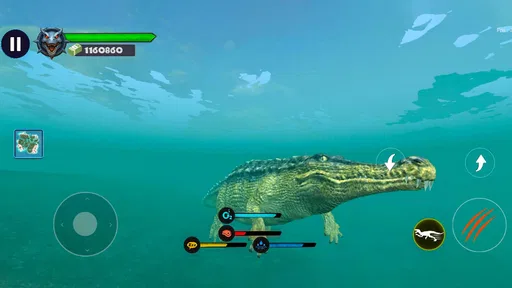
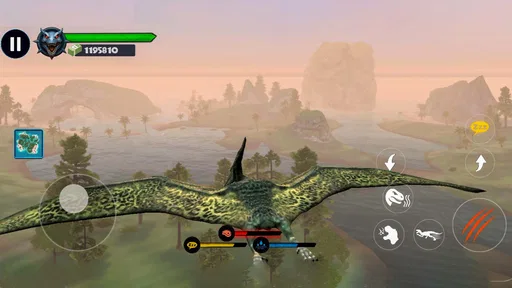
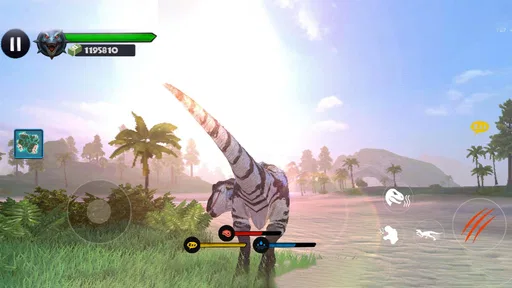
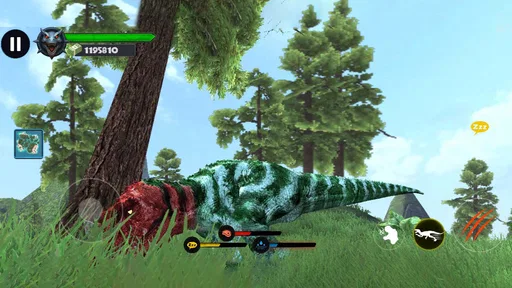
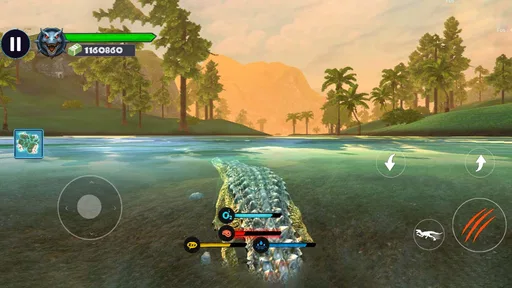
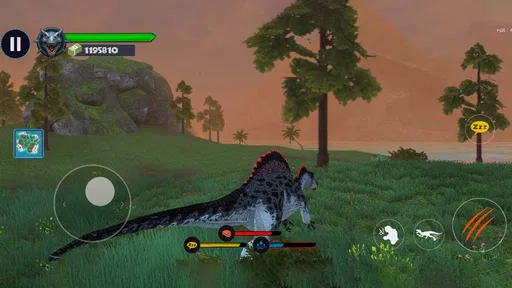
Our Review of Jurassic Clash Primal Dino Sim
 Analysis by Appyee
I spent time with Jurassic Clash: Primal Dino Sim as an adventure game built around the appeal of prehistoric conflict. The first impression is easy to understand: you are stepping into a dinosaur-focused battlefield, and the attraction comes from seeing how long that theme can support meaningful play rather than simply looking impressive in screenshots. Techouse Games keeps the concept direct, which makes it approachable for anyone who wants a quick prehistoric game without learning a complicated fictional universe first.
It is free to download, carries a Teen content rating, and runs on Android devices using version 6.0 or later. The current release is 0.4.6. Those details make it accessible to a broad range of phones, although the actual experience will still depend on how comfortably a particular device handles a busy action scene. The game has reached over five million installs, with a 4.1 average from around 7,600 ratings, so it has clearly attracted a sizeable audience while leaving room for mixed opinions.
How the early goals shape the first sessions
The opening appeal is not subtle, and I mean that positively. A prehistoric battlefield gives the player an immediate reason to keep moving: identify danger, understand the space, and work out how to survive the next encounter. I found that this clarity matters on a phone, where a game has to communicate its purpose quickly. You do not need a long explanation before understanding that the central challenge is tied to dinosaurs, confrontation, and staying effective under pressure.
What makes the beginning work is the sense of a short-term objective. Even when I was not thinking about long-term progress, I had a practical question in mind: what should I handle first, and how can I avoid wasting an opportunity? That kind of moment-to-moment decision-making is more useful than a large collection of disconnected tasks. It gives the early play sessions a direction without requiring the game to bury the player in menus or background story.
My advice is to treat the first encounters as a learning period rather than rushing through them. Pay attention to how much room you need, which threats force you to react immediately, and whether an aggressive approach actually saves time. In dinosaur games, it is tempting to focus only on the biggest creature on screen. I found it more helpful to read the whole situation, because a supposedly simple clash can become difficult when movement and positioning are ignored.
This is also where the game will divide players. If you enjoy the fantasy of controlling a prehistoric battle but want a detailed simulation with extensive management, the early structure may feel lighter than expected. If you prefer an accessible adventure that puts the theme ahead of complicated preparation, the direct approach is easier to appreciate. I would not choose it for a quiet natural-history experience; the emphasis is clearly on conflict and action.
What progress feels like during ordinary play
The most important progress signal is not a number I can quote or a reward screen I can promise will appear in every session. It is the way your decisions become more deliberate. At the start, the dinosaur theme may be enough to pull you forward. After a few sessions, the more interesting question is whether you are learning to manage encounters better. I noticed that successful play felt less like random survival when I stopped treating every confrontation in the same way.
That distinction matters because a game can show visible advancement while leaving the player mentally unchanged. Here, the useful form of progress is practical: recognizing danger sooner, choosing when to commit, and understanding that a fast attack is not automatically the best attack. These are small improvements, but they give repeat sessions a purpose even when you are playing in short bursts.
For an everyday example, I can imagine opening it during a commute or while waiting for an appointment. I would not begin with the expectation of completing a long story arc. Instead, I would use one session to test a different approach, then stop when the next interruption arrives. That makes the game a better fit for players who like compact goals and gradual mastery than for someone who needs a large narrative milestone every time they play.
One useful habit is to separate failure caused by the game from failure caused by impatience. If an encounter goes badly, I would replay with one change rather than changing everything at once. Keep the same general plan, alter your timing or positioning, and see whether the result improves. This turns a frustrating loss into a small experiment and helps reveal whether the challenge is genuinely unfair or simply unfamiliar.
Challenge, pacing, and the point where the rhythm may slow
The pacing works best when the game gives you a clear reason to stay engaged without making every moment feel like an emergency. Prehistoric combat naturally supplies visual drama, but drama alone can become tiring. I preferred the sessions where I had enough time to read the situation and make a choice, rather than reacting blindly to constant pressure. That balance is important for a mobile adventure game because touch controls and a smaller screen can make rushed decisions feel less satisfying.
The difficulty question is therefore personal. Players who enjoy learning through repeated attempts may find the challenge motivating. Those who want a relaxed dinosaur playground may feel that the battlefield framing asks too much attention. I would especially avoid approaching it as a passive experience. The theme may attract you, but staying effective requires active observation and a willingness to adjust your approach.
A practical way to manage the difficulty is to play in focused blocks. Before starting, decide whether you are testing movement, learning an opponent, or simply trying to finish a straightforward objective. That prevents the common mobile-game problem of playing without a clear purpose and then blaming the game when the session feels unproductive. It also makes the pacing easier to judge: you can tell whether you are improving or merely repeating the same mistake.
I also recommend not judging the entire experience by the first few minutes. The opening establishes the fantasy, but the real test is whether the encounters continue to ask you to think. If later play only rewards repeating one safe action, the novelty will fade quickly. If the situations keep encouraging better timing and awareness, the simple premise has more staying power. My opinion is that the game is strongest when I approach it as a skill-building adventure rather than a collection of dinosaur images.
Unlocks, motivation, and retention pressure
Progression in a game like this has to answer a basic question: why return after the initial dinosaur excitement wears off? The answer cannot be only the setting. I found the most convincing reason to continue in the possibility of handling the next challenge more intelligently. That is a modest but genuine form of retention. It suits players who enjoy seeing their own decisions improve, even when the game does not need a heavy story to justify another session.
At the same time, the free-to-play structure deserves attention. The game is free, but in-app purchases range from $0.99 to $99.99 per item. That broad range means I would approach optional spending carefully, especially before understanding how much progress can be earned through normal play. My recommendation is simple: play long enough to decide whether the core loop is enjoyable on its own, then treat purchases as a separate choice rather than as part of the basic entry cost.
This is where retention pressure can affect the experience. If a player feels pushed to pay whenever progress slows, the prehistoric theme will not compensate for that frustration. I prefer a game to make the reason for spending clear and optional. Since the purchase range includes both a low-cost entry point and a much higher ceiling, families should also think about device-level purchase controls before handing the phone to a younger player. The Teen rating is another reason to consider whether the tone suits the person who will be playing.
There is also a psychological trade-off in any progression-focused adventure. Unlocks can make the next session feel purposeful, but they can also turn play into a checklist. I would keep an eye on my own reaction: am I returning because I want to master the battlefield, or because I feel obliged to clear a progress marker? The former is healthy motivation. The latter is a sign that I should take a break or decide that this style of game is not for me.
One of the less obvious strengths of the setup is that it can support two different play styles. A casual player can enjoy the prehistoric premise in short sessions, while a more committed player can concentrate on refining decisions and overcoming tougher moments. The weakness is that neither audience will be satisfied if it expects the other style. Casual players may dislike pressure, while dedicated players may want deeper systems than the direct adventure format provides.
Where it fits among dinosaur and adventure alternatives
Compared with a conventional adventure game built around a long plot, this title is easier to enter but may offer less reason to care about characters or story developments. I would choose a narrative alternative when I want exploration, dialogue, and a sense of traveling through a larger world. Jurassic Clash is the better choice when my priority is the immediate fantasy of prehistoric confrontation and I do not want to invest time in a complicated campaign setup.
It also differs from a peaceful dinosaur simulator. A calm simulation is more suitable for players who want to observe creatures, manage an environment, or enjoy a slower pace. This game’s identity is tied to the battlefield, so anyone looking for gentle discovery should skip it. The category label of adventure is useful here: it suggests movement and challenge rather than a pure encyclopedia-style dinosaur experience.
Against more elaborate strategy games, the attraction is accessibility. I can start thinking about the encounter itself instead of first learning a large economy, technology tree, or army-management system. The trade-off is depth. Players who enjoy planning several layers ahead may eventually prefer a strategy title with more visible systems and long-term control. I would not call that a flaw so much as a matter of choosing the right kind of prehistoric game.
The game is also not the right pick for someone who wants a completely offline, interruption-proof routine unless they have personally checked how it behaves on their device and connection. I would make that decision before relying on it for travel. For normal casual use, the more important questions are whether the controls feel comfortable, whether the visual action remains readable, and whether the progression keeps offering a reason to continue without making purchases feel necessary.
Who should play it and who should pass
I would recommend it to players who like dinosaurs, quick adventure sessions, and the satisfaction of improving through repeated encounters. It is especially appealing if you enjoy a clear theme and prefer learning a game by playing rather than reading a long manual. The free entry also makes it easy to test the basic feel before deciding whether it deserves a permanent place on your phone.
I would be more cautious for younger players because of the Teen rating and the presence of in-app purchases. Parents should look at the game’s tone directly and set purchase protections before allowing unsupervised play. I would also steer away from it if your ideal dinosaur game is educational, peaceful, or focused on detailed creature care. The battlefield premise is too central for those expectations to disappear.
Players with older phones should remember that meeting the Android 6.0 requirement does not guarantee identical performance across every device. A newer handset may handle busy scenes more comfortably, while an older compatible model could make the experience less pleasant. I would test a short session before investing time or money. That is particularly sensible for a game whose enjoyment depends on reading action quickly.
My verdict on the progression loop
After reviewing the way its goals, progress signals, challenge, and pacing work together, I see Jurassic Clash: Primal Dino Sim as a focused prehistoric adventure rather than a deep simulation or story-heavy campaign. Its strongest quality is clarity: the dinosaur battlefield concept is easy to understand, and the game can give short sessions a practical purpose through better decisions and more confident play.
Its main limitation is equally clear. Players who need rich management, a substantial narrative, or a completely relaxed pace may outgrow it. The free-to-play purchase range also means I would keep spending under control and judge the core experience first. That does not prevent the game from being enjoyable, but it changes how I would recommend it: try it for the action and the learning curve, not because a purchase is required to make the premise worthwhile.
Techouse Games has created a suitable choice for dinosaur fans who want conflict rather than contemplation. With over five million installs and a 4.1 average, it has enough audience interest to justify a look, but those figures should not replace your own judgment about pacing and spending. My final recommendation is to try the free version with a clear limit on purchases, play patiently through the early encounters, and keep it if improving your battlefield decisions feels rewarding.
Privacy and Permissions
See what permissions an app requests and how it handles your data.
- Wi-Fi connection information
- view Wi-Fi connections
- Other
- view network connections, full network access, control vibration, prevent device from sleeping, Google Play license check
Verdict
Strengths of Jurassic Clash Primal Dino Sim
- Large variety of dinosaurs to unlock and control
- Simple controls make the game easy to pick up
- Prehistoric environments provide visual variety
- Short sessions work well for casual mobile play
- Offline access may suit gaming without a constant connection
Limitations of Jurassic Clash Primal Dino Sim
- Progress can feel repetitive after extended play
- Some upgrades may require considerable time to earn
- Large creatures can make movement feel less precise
- The game may use significant battery during longer sessions
- Ad-heavy moments can interrupt the overall gameplay flow
Similar Picks in This Category
View All
Roblox
Roblox Corporation4.2

Pokémon GO
Niantic, Inc.3.5

Ninja warrior: legend of adven
TOH Games4.6

Ninja Arashi
Black Panther4.6

Eyes - The Horror Game
Fearless Games sp. j.4.5

Critical Action:Gun Strike Ops
FPS Shooter & Action Game4.3
Frequently Asked Questions
What is Jurassic Clash Primal Dino Sim about?
Jurassic Clash Primal Dino Sim is a dinosaur-themed simulation and action game in which you control prehistoric creatures, explore dangerous environments, hunt for food, and compete against other dinosaurs. The experience focuses on survival, growth, and combat, while missions and challenges encourage you to keep improving your dinosaur and discovering new areas.
Can I play Jurassic Clash Primal Dino Sim offline?
The game may allow some of its core dinosaur-simulation activities to be played without a constant internet connection, but availability can depend on the version installed and the device being used. Features such as advertisements, online rewards, updates, cloud synchronization, or other connected services may require internet access, so an offline experience should not be assumed for every section.
Is Jurassic Clash Primal Dino Sim free to download and play?
Jurassic Clash Primal Dino Sim is generally offered as a free download, allowing players to begin exploring and controlling dinosaurs without paying upfront. However, free-to-play games commonly include optional in-app purchases, advertisements, or paid items that can speed up progress or unlock additional content. Check the store listing carefully before downloading, especially if children use the device.
What devices are compatible with Jurassic Clash Primal Dino Sim?
Compatibility depends on the operating system, device model, available storage, and the minimum software version required by the current release. Before installing, review the official Google Play or App Store listing to confirm requirements for your phone or tablet. Older devices may experience longer loading times, reduced visual quality, or performance issues during larger dinosaur battles.
Does the game contain violence or features parents should know about?
Because Jurassic Clash Primal Dino Sim is built around prehistoric survival and dinosaur combat, it includes fictional battles, hunting, attacks, and predator-versus-prey situations. The presentation is generally game-like rather than realistic, but younger players may still find the action intense. Parents should also review advertising, in-app purchases, privacy permissions, and the age rating before allowing children to play.
Play our best games!


